The Description of Delegated Umrah, Step by Step
كيف تُؤدى العمرة نيابة عن الغير خطوة بخطوة
Introduction
Many people requesting delegated Umrah on behalf of a deceased or ill loved one ask: how is this Umrah actually performed? And does it differ from an Umrah performed by someone for themselves? The answer is that the rites of delegated Umrah are exactly the same as those of an ordinary Umrah, with no difference except in the intention at Ihram. Below is a detailed explanation of each step, based on the booklet "The Description of Umrah," issued by the Presidency of Religious Affairs at the Grand Mosque and the Prophet's Mosque, supervised in its authorship by the late Sheikh Abdul Aziz bin Baz.
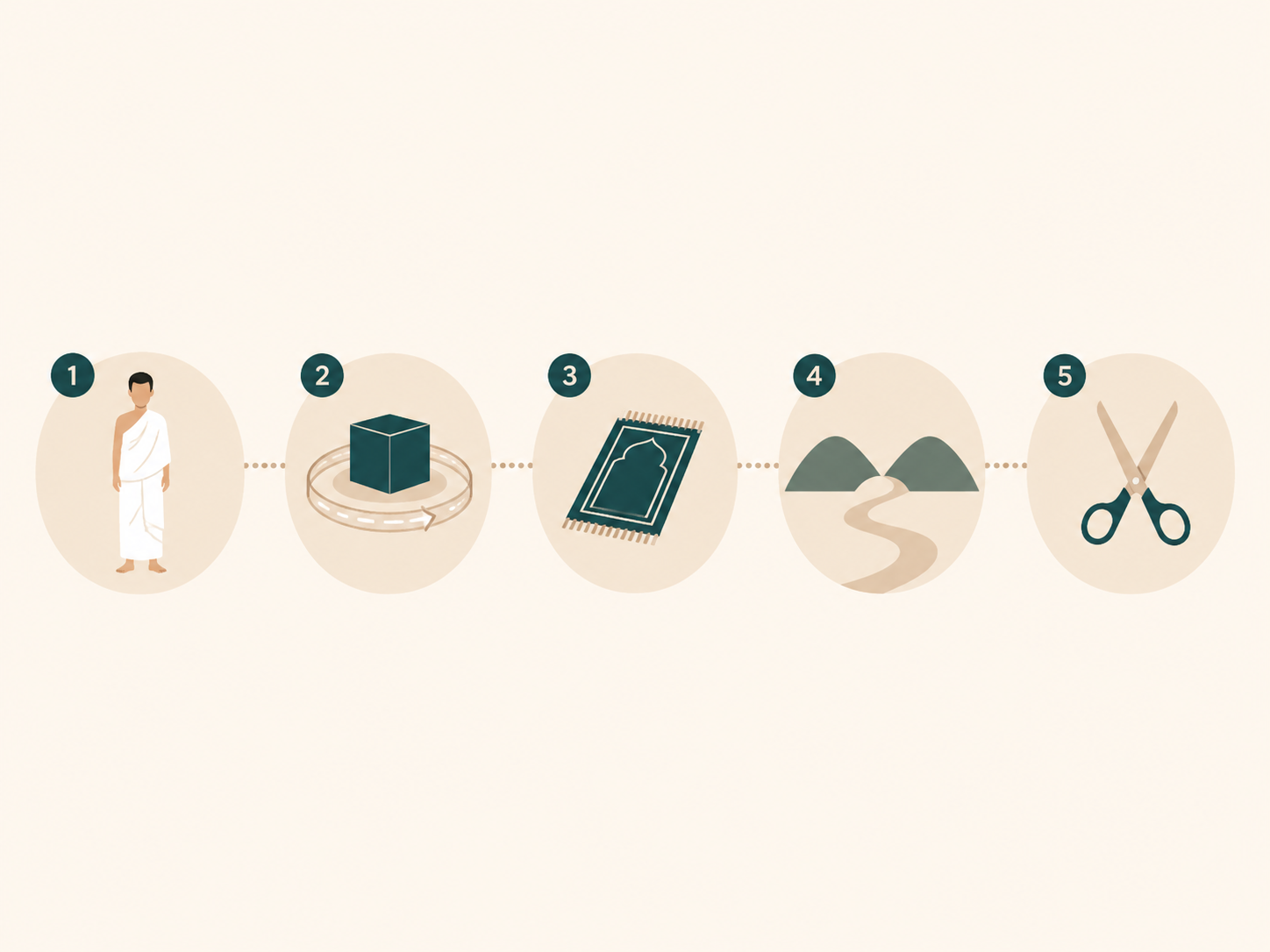
Step 1: Ihram from the Miqat
Umrah begins with Ihram from the designated Miqat. The performer (the proxy) begins by bathing and purifying themselves at the specified Miqat, then the man wears the Ihram garments (a white lower and upper wrap), while the woman enters Ihram in her regular modest clothing, covering her hair but not her face in front of non-mahram men. Here lies the essential difference in delegated Umrah: at the intention for Ihram, the performer intends in their heart, or declares verbally, saying: "Labbayka Umrah 'an [name]" (the name of the one delegated for), then continues with the Talbiyah: "Labbayka Allahumma labbayk, labbayka la sharika laka labbayk..."
Step 2: Entering Makkah and the Tawaf
Upon arriving at the Grand Mosque, the performer proceeds directly to perform the Tawaf of Umrah — seven circuits around the Kaaba al-Musharrafah, beginning and ending at the Black Stone. It is Sunnah for men to perform "Idtiba'" (uncovering the right shoulder) and "Raml" (walking briskly with short, close steps) during the first three circuits only, then walking normally for the remaining four.
Step 3: Praying Two Rak'ahs Behind the Station of Ibrahim
After completing the Tawaf, it is recommended to pray two rak'ahs behind the Station of Ibrahim, peace be upon him, if possible, or anywhere else in the mosque if reaching it is difficult due to crowding.
Step 4: Sa'i Between Safa and Marwah
The performer then proceeds to perform Sa'i — seven circuits between the hills of Safa and Marwah, starting at Safa and ending at Marwah, with the traditional supplications recited at each.
Step 5: Tahallul (Cutting or Shaving the Hair)
The rites of Umrah conclude with the man shaving his entire head or trimming his hair, shaving being preferable, while the woman only trims a fingertip's length of her hair, without shaving. With this, the performer exits the state of Ihram, and the Umrah is complete, by Allah's grace.
What Distinguishes the Performance of Delegated Umrah Specifically?
The only difference between an Umrah performed by someone for themselves and delegated Umrah is the intention at Ihram; all other pillars, obligations, and Sunnahs are entirely identical. And because the one being delegated for (especially if living) cannot witness the performance of the rites themselves, precise documentation of every step through photo and video becomes a matter of great importance — not merely for reassurance, but to reinforce transparency and trust between the requester and the provider.
From this standpoint, trustworthy platforms are careful to document every stage of the performance, from Ihram through Tahallul, and send it in full to the beneficiary, while making it possible to follow the execution status moment by moment, so as to ensure the peace of mind that the work has reached its intended recipient in the correct manner.
Conclusion
The rites of delegated Umrah do not differ from an ordinary Umrah except in the intention at Ihram. But the absence of the one being delegated for makes transparent documentation and live tracking of every step a religious and ethical necessity, not merely an additional technical feature.